



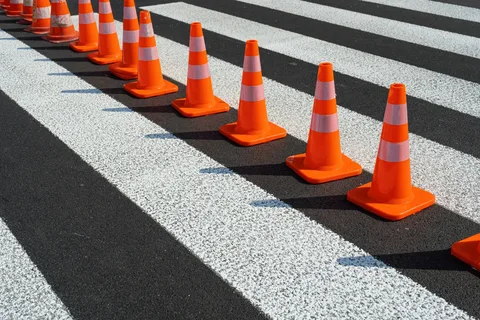
Traffic safety cones are more than just bright orange objects lining the streets; they play a vital role in keeping both drivers and pedestrians safe. From construction zones to accident sites, these cones are essential tools for managing traffic and preventing injuries. Understanding how traffic safety cones function can highlight their importance in maintaining order and reducing hazards on the road.
In this blog post, we’ll explore how these safety cones protect drivers and pedestrians. Read on!
Directing Traffic Flow Effectively
One of the primary ways traffic safety cones protect drivers and pedestrians is by directing traffic flow. In construction zones or during road maintenance, cones clearly indicate where vehicles should go, preventing confusion and reducing the risk of accidents. By guiding drivers along a safe path, cones ensure that traffic moves smoothly, even in areas where lanes may be temporarily closed or narrowed. This controlled flow helps drivers anticipate changes in the road, lowering the chances of sudden stops or collisions.
Alerting Drivers to Potential Hazards
Traffic safety cones serve as a visual warning system for potential hazards. Whether it’s a pothole, a fallen tree, or a work crew on the road, cones immediately catch the attention of drivers and pedestrians. Their bright colors and reflective surfaces make them visible during both day and night, ensuring that people can react in time to avoid danger. By highlighting these risks, cones lessen the likelihood of accidents and create a safer environment for everyone in the area.
Protecting Workers and Pedestrians
Traffic safety cones are critical in protecting those who are most vulnerable near roadways—construction workers and pedestrians. By clearly marking work zones or pedestrian walkways, cones create a physical barrier that keeps vehicles at a safe distance. This separation decreases the chances of accidents involving people on foot or individuals performing road maintenance. For pedestrians, cones guide them around unsafe areas, helping them avoid slip-and-fall hazards or interactions with moving traffic.
Enhancing Visibility in Low-Light Conditions
Visibility is a key factor in preventing accidents, and traffic safety cones are designed to be highly visible in low-light conditions. Most cones feature reflective strips or neon colors that stand out during dusk, nighttime, or rainy weather. This enhanced visibility ensures that drivers can identify hazards from a distance, giving them more time to slow down or change lanes safely. Pedestrians also benefit from this feature, as it signals areas to avoid and helps them navigate streets with confidence.
Supporting Emergency and Temporary Situations
Traffic safety cones are indispensable during emergencies and temporary events. Whether it’s a car accident, a parade, or a sudden road closure, cones can be quickly deployed to control traffic and protect everyone nearby. Their portability and ease of use make them ideal for dynamic situations where permanent barriers are impractical. By creating temporary safe zones, cones minimize chaos and the risk of secondary accidents during urgent or unexpected events.
Promoting Public Awareness and Responsibility
Beyond physical protection, traffic safety cones play a role in promoting public awareness and responsible driving. Seeing cones on the road signals to drivers that they need to pay closer attention, reduce speed, and respect designated boundaries. This visual cue reinforces safe driving habits, which benefits not just the immediate area but the overall safety of the community. Pedestrians, too, become more aware of where it is safe to walk and when to exercise caution.
Traffic safety cones may seem simple, but their impact is profound. By directing traffic, alerting drivers to hazards, protecting vulnerable individuals, enhancing visibility, managing emergencies, and promoting awareness, these cones serve as silent guardians on our streets. Investing in proper cone placement and maintenance ensures that both drivers and pedestrians can navigate roads safely, making our communities safer for everyone.