



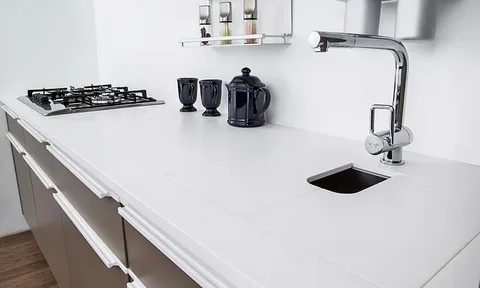
Choosing the right surface material involves more than selecting an attractive color or finish. Residential and commercial environments require materials that can withstand everyday use while supporting practical maintenance and creative design. Hanex solid surface product applications demonstrate how acrylic solid surface materials can meet these requirements across different settings. Hyundai L&C offers Hanex solid surfaces designed for versatility, durability, and fabrication flexibility, making them suitable for a wide range of interior projects.
From kitchen countertops and bathroom vanities to healthcare facilities and commercial reception areas, solid surface materials provide opportunities to combine functionality with contemporary aesthetics. Understanding their different applications helps homeowners, architects, designers, and contractors make informed decisions when specifying materials for new construction or renovation projects.
Understanding Hanex Solid Surface Material
Hanex is an acrylic solid surface material manufactured using a combination of methyl methacrylate (MMA), polymethyl methacrylate (PMMA) resin, and alumina trihydrate (ATH) fillers. Its composition provides a consistent material structure that supports different fabrication techniques and design requirements.
One of its defining characteristics is its nonporous surface. Unlike materials with naturally occurring pores or multiple layers, acrylic solid surfaces offer a smooth finish that does not readily absorb liquids. This characteristic makes them practical for environments where cleanliness and regular maintenance are important.
Other notable characteristics include:
- Seamless appearance: Professional fabrication allows individual sections to be joined with inconspicuous seams.
- Repairability: Minor surface damage can often be repaired through appropriate professional techniques.
- Thermoformability: The material can be heated and shaped into curved or customized designs.
- Design flexibility: Different colors, patterns, and finishes accommodate various interior styles.
- Easy maintenance: The nonporous construction supports straightforward cleaning and routine care.
These properties make Hanex suitable for applications where appearance, usability, and fabrication flexibility must work together.
Residential Hanex Solid Surface Product Applications
Residential interiors require surfaces that complement the home’s design while accommodating daily activities. Acrylic solid surfaces offer flexibility for several areas, particularly kitchens, bathrooms, and customized furniture.
1. Kitchen Countertops and Food Preparation Areas
Kitchen countertops experience frequent contact with food, liquids, cooking equipment, and cleaning products. Choosing a surface that is easy to clean and maintain is therefore an important consideration.
Hanex solid surfaces provide a nonporous countertop option that helps prevent liquids from penetrating the material. Their smooth construction also makes routine cleaning more manageable. Selected products carry NSF/ANSI 51 certification for food equipment materials, making them suitable for specified food preparation applications.
Designers can also incorporate integrated sinks, customized edges, and coordinated backsplashes to create a cohesive kitchen appearance. However, homeowners should still use cutting boards and heat-resistant trivets to protect the surface from sharp objects and direct contact with hot cookware.
2. Bathroom Vanities and Integrated Sinks
Bathrooms require materials that can handle frequent moisture exposure, personal care products, and regular cleaning. Hanex surfaces are suitable for vanity countertops, integrated sinks, and other bathroom installations where a smooth, consistent appearance is desirable.
Their nonporous structure helps limit liquid absorption, while inconspicuous seams reduce the number of visible joints across fabricated surfaces. These characteristics make them useful for contemporary bathrooms that prioritize straightforward maintenance.
Custom fabrication also allows designers to coordinate countertop dimensions, sink configurations, and edge profiles. This flexibility is particularly valuable in bathrooms with unusual layouts or limited available space.
3. Shower Walls and Decorative Interior Features
Solid surface materials can also contribute to bathroom wall designs and selected decorative installations. Wall panels create a more continuous visual appearance than traditional layouts with numerous visible joints.
In suitable applications, Hanex can be fabricated into customized panels and curved features that complement the surrounding fixtures. Designers should evaluate product specifications, installation requirements, and exposure conditions before selecting a particular finish for shower or wet-area use.
Commercial Applications of Hanex Solid Surfaces
Commercial environments often experience greater surface usage than residential properties. Reception counters, public restrooms, food service areas, and retail displays must accommodate repeated contact while maintaining an attractive appearance.
4. Healthcare Facilities and Patient Rooms
Healthcare environments require careful material selection because countertops, work surfaces, and other fixtures undergo frequent cleaning and disinfection.
Hanex solid surfaces can be used for:
- Patient room countertops and bedside tables
- Healthcare reception desks
- Restroom vanities and sinks
- Wall cladding and selected interior features
- Cafeteria counters and food service areas
Their nonporous construction and smooth finish support cleaning routines, while inconspicuous seams can help reduce areas where dirt and residue accumulate.
Material selection should still account for the facility’s cleaning protocols, applicable standards, and intended use. Specifiers should verify compatibility with the disinfectants and chemicals used in the particular healthcare environment.
5. Hospitality and Restaurant Interiors
Hotels, restaurants, and hospitality businesses need surfaces that balance visual appeal with everyday functionality. Guest-facing areas must create a welcoming impression, while service areas require materials that can accommodate frequent use.
Hanex can be incorporated into hotel reception counters, restaurant countertops, café service stations, bathroom vanities, and selected decorative installations.
Its thermoforming capabilities also allow fabricators to create curved counters and distinctive design features. This gives hospitality designers more freedom to develop interiors that reflect a property’s identity without relying exclusively on standard rectangular surfaces.
For food service applications, the appropriate product certification and local sanitation requirements should be confirmed before installation.
6. Retail Stores and Shopping Centers
Retail environments use countertops, display fixtures, shelving, and customer service desks to support daily operations and present merchandise. These surfaces must contribute to the overall shopping experience while accommodating regular contact.
Hanex solid surfaces can be fabricated into display platforms, retail counters, information desks, and customized fixtures. Its range of colors and design options also helps businesses coordinate surfaces with branding elements and interior finishes.
In shopping centers, the material can be considered for restroom vanities, service counters, and selected decorative features. Its repairability is another practical consideration when evaluating long-term maintenance requirements in frequently used spaces.
7. Educational and Public Facilities
Schools, universities, and other public institutions require functional surfaces that can withstand regular use by students, staff, and visitors.
Potential applications include classroom countertops, restroom vanities, cafeteria surfaces, reception desks, and selected common-area fixtures.
The material’s nonporous construction supports routine cleaning, while its fabrication flexibility allows designers to create surfaces suited to different room layouts. Color selection can also help establish consistent interior designs across classrooms, administrative offices, and shared facilities.
How Thermoforming Expands Design Possibilities
One important advantage of acrylic solid surface materials is their ability to be thermoformed. This fabrication process involves heating the material under controlled conditions until it becomes flexible enough to be shaped.
Once formed and cooled correctly, the material retains its customized shape. This makes it possible to produce curved countertops, rounded reception desks, integrated design features, and other architectural details that would be difficult to achieve with rigid surfacing materials.
Thermoforming also gives designers greater freedom when working with unconventional layouts. Instead of limiting a project to straight edges and standard dimensions, fabricators can create flowing shapes that complement the surrounding architecture.
Achieving consistent results requires appropriate equipment, temperature control, and fabrication expertise. Working with an experienced fabricator helps ensure that the finished installation meets the project’s dimensional and performance requirements.
Important Considerations When Selecting Hanex Applications
Although solid surface materials offer considerable versatility, choosing the right application requires careful planning. Architects, contractors, and property owners should consider several factors before specifying a product.
Intended use: Identify whether the surface will be exposed to moisture, food preparation, frequent contact, or commercial cleaning products.
Design requirements: Review available colors, patterns, sheet dimensions, thicknesses, and edge profiles to determine whether the material suits the intended design.
Fabrication capabilities: Confirm that the selected fabricator has the necessary experience and equipment for specialized requirements such as thermoforming, integrated sinks, and inconspicuous seams.
Maintenance expectations: Understand the recommended cleaning procedures and the precautions needed to prevent damage from excessive heat, sharp objects, or unsuitable chemicals.
Installation requirements: Consider substrate support, measurements, joining techniques, and other project-specific details before fabrication begins.
Evaluating these factors early can help prevent unnecessary modifications and support a more successful installation.
Making the Most of Solid Surface Design Flexibility
The growing range of residential and commercial design requirements has increased the importance of materials that combine practical performance with fabrication versatility. Hanex solid surface product applications extend beyond conventional countertops, offering possibilities for bathrooms, healthcare facilities, hospitality interiors, retail environments, and educational buildings.
With Hyundai L&C’s Hanex product range, designers and property owners can consider nonporous construction, repairability, thermoforming capabilities, and various design options when planning projects with specific aesthetic and functional requirements. However, successful results depend on selecting the appropriate product, understanding its limitations, and working with qualified fabrication and installation professionals.
By evaluating the intended application and technical requirements from the beginning, designers and property owners can make more informed material decisions and create interior spaces that remain functional, attractive, and easier to maintain over time.