



Concrete is one of the least forgiving materials on any building site. Once it leaves the mixer, the clock starts ticking, and there is no simple way to add more or hand some back. That is why guessing how much you need is one of the most expensive gambles in construction, and one of the easiest to avoid.
A concrete calculator takes that gamble out of the equation. By turning a few measurements into an accurate volume in cubic metres, it tells you exactly how much to order before a single load is booked. The gap between using one and guessing can be measured in hundreds of pounds, lost hours, and, in the worst cases, a slab that has to be broken out and poured again.
Why Guessing Your Concrete Quantity Is So Risky?
Concrete is unforgiving in a way that few other building materials are, and that is what makes guessing so dangerous. Three factors leave almost no margin for error:
- It is sold by the cubic metre, so a rough estimate translates straight into the wrong order quantity.
- It sets fast, giving you only 45 minutes to two hours of working time once it is delivered.
- It cannot be paused, so a shortfall in the middle of a pour cannot simply wait for more to arrive.
Put together, these mean a single miscalculation can stop a job in its tracks. There is no room to nip out for another bag, and no way to undo a pour once it has started.
The Real Cost of Getting It Wrong
A wrong quantity hits both your budget and your schedule, often at the same time. The damage tends to fall into three areas, each with its own price tag.
Ordering Too Little
Running short mid-pour is the most damaging mistake of all, and it rarely costs only the price of the missing concrete. A small shortfall can trigger several charges at once:
- A Second Delivery: Most suppliers apply a minimum order charge, so a top-up of half a metre can cost as much as several metres.
- Emergency or Short-load Fees: Rushing out an extra load at short notice usually carries a premium.
- Lost Time: The pour stalls while you wait, leaving labour and hired equipment idle.
The most serious risk, though, is structural. If fresh concrete is poured against a batch that has already begun to set, the two will not bond properly and form a cold joint, a permanent line of weakness in the slab. On a structural pour, the only reliable fix is to break it out and start again, turning a small saving into a major loss.
Ordering Too Much
Over-ordering feels like the safe choice, but it quietly drains the budget. UK ready-mix concrete typically costs between £105 and £160 per cubic metre, so every surplus metre you cannot place is money poured straight into waste, on top of the cost and effort of disposing of it legally.
There is an environmental price too. Leftover concrete that hardens in the drum or on the ground adds to the construction waste stream, and disposal is tightly regulated. A precise estimate trims both the financial and the environmental cost in a single step, which is why a careful figure beats a generous guess every time.
The Hidden Costs of Delays
The concrete itself is often the smallest part of the bill when a pour goes wrong. The knock-on effects do the real damage:
- A hired pump and delivery crew was left waiting, charged by the hour.
- Your own team standing idle instead of moving to the next task.
- A missed delivery window that pushes the work into worse weather.
- Disruption to the wider programme and any trades scheduled to follow.
These costs are easy to overlook at the ordering stage, yet they routinely exceed the value of the concrete that caused them.
How a Concrete Calculator Removes the Guesswork?
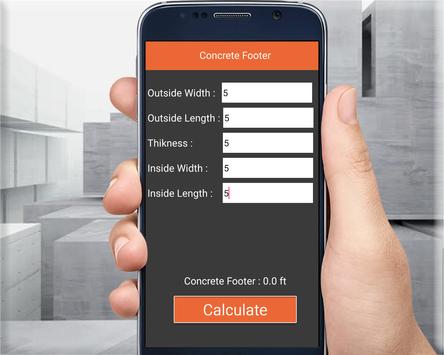
A concrete calculator replaces rough estimates with a precise, repeatable figure. You enter the length, width, and depth of your pour, and it returns the exact volume in cubic metres, ready to order, with no mental arithmetic and no rounding errors.
Its real value lies in catching mistakes before they reach the site, where they become expensive to fix. A good calculator also handles the steps people most often get wrong, such as converting units, applying depth correctly, and prompting for a wastage buffer.
Many suppliers offer one free of charge. Pro-Mix Concrete, for example, provides an online Concrete Calculator that works out ready-mix or screed quantities in seconds, so you can place an accurate order with confidence rather than a hopeful guess.
Steps to Work Out How Much Concrete You Need
The basic calculation is straightforward and follows a few simple steps:
- Measure the length, width, and depth of the pour in metres.
- Multiply the three figures together to find the volume in cubic metres.
- For irregular areas, split them into rectangles and add the volumes together.
- Add 5 to 10% to the total as a buffer for spillage and uneven ground.
As an example, a slab 4 metres long, 3 metres wide, and 0.1 metres deep works out at 1.2 cubic metres before the buffer. A concrete calculator runs every step for you and removes the risk of a maths slip, which matters most on the larger pours where a small percentage error becomes a full extra load.
Tips to Order Concrete With Confidence
A little preparation turns an accurate estimate into a smooth, single-delivery pour:
- Measure twice: Check every dimension before you commit to an order.
- Add a buffer: Build in 5-10% for spillage and uneven ground.
- Confirm the grade: Order the right strength for the job, not just the right volume.
- Book ahead: Reserve your delivery slot early to avoid a rushed pour.
- Prepare the site: Have formwork, tools, and labour ready before the truck arrives.
- Ask the experts: When in doubt, give your supplier the dimensions and let them confirm.
Together, these habits cost almost nothing yet protect you from the expensive surprises a wrong order brings. A few extra minutes of planning up front is what turns the pour itself into the easy part of the job.
Important FAQs
How much concrete do I need?
Multiply the length, width, and depth of your pour in metres to get the volume in cubic metres, then add 5-10% for waste. For irregular shapes, split the area into rectangles, or use a concrete calculator.
Is it better to order too much or too little concrete?
It is safer to order slightly too much than too little. A small surplus costs a little, but running short risks a weak cold joint, project delays, and an expensive second delivery. A 5 to 10% buffer gets it right.
What is a cold joint in concrete?
A cold joint forms when fresh concrete is poured onto a previous batch that has already started to set. The two layers do not bond fully, creating a weak line in the slab. It often results from running short mid-pour.
How accurate is a concrete calculator?
A concrete calculator is highly accurate as long as your measurements are correct. It applies the right formula every time and removes the maths errors behind wrong orders. For complex pours, confirm the result with your supplier before booking.
Can I add water if the concrete is short on site?
No, you should not stretch a load by adding water. Extra water weakens concrete and reduces its strength and durability. If you are short, order the correct amount or arrange more from your supplier rather than diluting the mix.
Bottom Line
On a concrete pour, there are no second chances once the truck arrives. Guessing the quantity risks weak cold joints, wasted material, emergency deliveries, and costly delays, while an accurate figure keeps the job on budget and on programme. A concrete calculator takes seconds to use and removes the guesswork entirely. Measure carefully, add a small buffer, and order with confidence rather than crossing your fingers and hoping the load stretches far enough.
Pro-Mix Concrete is one of the UK’s largest ready-mix suppliers, delivering quality concrete and screed across London with same-day and next-day options. It’s a free online concrete calculator that works out exactly how much you need in seconds, so guesswork never enters the equation.
Try their calculator or speak to the team to get your order right the first time.